
Canon EOS R50 V First Impressions
By Merry
At a glance
- The Canon EOS R50 V is Canon’s video-first mirrorless camera, and it is also the camera behind one of this week’s clearest deals: it is $569.99 at Best Buy, checked 7 November 2026, down from its $799.99 list — $230.00 off.
- We checked it again today, and the $569.99 price still holds.
Products in this article: CompareIdea — Canon EOS R50 V
The Canon EOS R50 V is Canon’s video-first mirrorless camera, and it is also the camera behind one of this week’s clearest deals: it is $569.99 at Best Buy, checked 7 November 2026, down from its $799.99 list — $230.00 off. We checked it again today, and the $569.99 price still holds. These are first impressions from Canon’s official specifications and the verified price — not hands-on testing.
What you’re actually getting
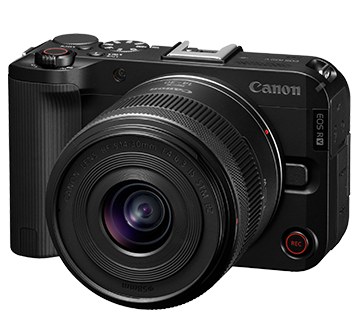
The R50 V is the first camera in Canon’s EOS V series, built around video. It uses a 24.0-megapixel APS-C CMOS sensor with Dual Pixel CMOS AF and a DIGIC X processor, and it takes Canon RF and RF-S lenses. Stills are JPEG, HEIF, RAW or C-RAW, and video is recorded in XF-HEVC S or XF-AVC S.
Video is the point. It records 4K UHD oversampled from 6K, with a 4K Crop mode at up to 59.94 frames per second and Full HD at up to 119.88 frames per second. Canon Log 3 is on board, along with Canon 709 and PQ/HLG, and there is a Slow and Fast mode, a time-lapse mode and vertical video with a vertical tripod socket — the features that mark this out as a camera for creators rather than a stills camera that happens to shoot video.
Autofocus uses Dual Pixel CMOS AF with subject detection for people, animals and vehicles, plus eye detection, and the sensor’s ISO range runs from 100 to 32,000 in manual mode, expandable to 51,200. Continuous shooting runs at 12 frames per second with the electronic first curtain shutter and 15 frames per second with the electronic shutter. There is one SD card slot, compatible with UHS-II cards.
The rest of the specification sheet is practical rather than flashy: a 3.0-inch touch LCD with about 1.04 million dots, a built-in stereo microphone with a 3.5mm microphone input and a headphone output, Wi-Fi and Bluetooth, USB-C, a micro HDMI output with clean output, and webcam and live-streaming support over USB. The body weighs 323g on its own, or 370g with battery and card, and measures 119.3 × 73.7 × 45.2 mm. It runs on Canon’s LP-E17 battery and uses the multi-function accessory shoe.
What the $569.99 price changes
At its $799.99 list, the R50 V was a considered buy for a creator who knew they wanted a video-first Canon. At $569.99 it is a different proposition: $230.00 off puts a 4K-oversampled-from-6K camera with Canon Log 3 into the price range of a mid-range stills camera. For context, the stills-first Canon EOS R50 is $679.00 today — $109.01 more than the R50 V. The video-first camera is currently the cheaper of the two.
Who it’s for, and who should skip it
This is a camera for creators who shoot video first — vloggers, streamers and anyone moving up from a phone who wants Canon’s colour, autofocus and lens range. It also suits a stills shooter who wants a light second body for video. Skip it if you need in-body stabilisation: the R50 V has none, and stabilisation comes from the lens only, so handheld work needs a stabilised lens or a gimbal.
The trade-offs
The trade-offs are the ones Canon made to keep this camera light and video-focused. There is no in-body image stabilisation. There is a single SD card slot, so there is no backup card while you shoot. And at 323g the body is light, which is good for a gimbal or a long shoot, but it also means a small LP-E17 battery — carry a spare if you are filming all day.
CompareIdea verdict
Our verdict, in words: at $569.99, the R50 V is the pick for video-first creators who want Canon’s 4K oversampled from 6K, Canon Log 3 and Dual Pixel autofocus without paying list price. The trade-off is the lack of in-body stabilisation, so budget for a stabilised lens or a gimbal if you shoot handheld. If you mainly shoot stills, the EOS R50 is the better buy — but for video at this price, the R50 V is hard to argue with.
Sources
All prices checked 7 November 2026.
Last updated: 7 November 2026